Dr. Guttmann’s Bed Bicycle
Exercise bikes have existed since the late 19th century and were already being used for fitness and rehabilitation by the 1890s. By the 1930s and 40s, some hospitals were using cycling-style equipment for physiotherapy, particularly for injured soldiers and polio patients. So the concept was not entirely new, but what made Sir Ludwig Guttmann’s version remarkable was the context and purpose behind it.
At Stoke Mandeville Hospital during and after the Second World War, most people with spinal injuries were kept in bed and expected to die within a few years. Treatment focused on preventing sores and infections rather than rebuilding lives. Guttmann completely challenged that thinking. His bed bicycle allowed paralysed patients to exercise while still lying flat and thus improving circulation, muscle tone, breathing, and morale. Just as importantly, it sent a message: these patients were athletes in training, not hopeless cases.
Dr Guttmann installed one of his bed bicycles at Chaseley, where it became a regular part of rehabilitation and remained in use until the 1990s. It allowed people to begin physical recovery at a very early stage — even before they could sit up or use a wheelchair — and played an important role in keeping people motivated during what could be a long and difficult recovery.
That belief in the power of movement endures at Chaseley today, where exercise bikes remain a vital part of rehabilitation.
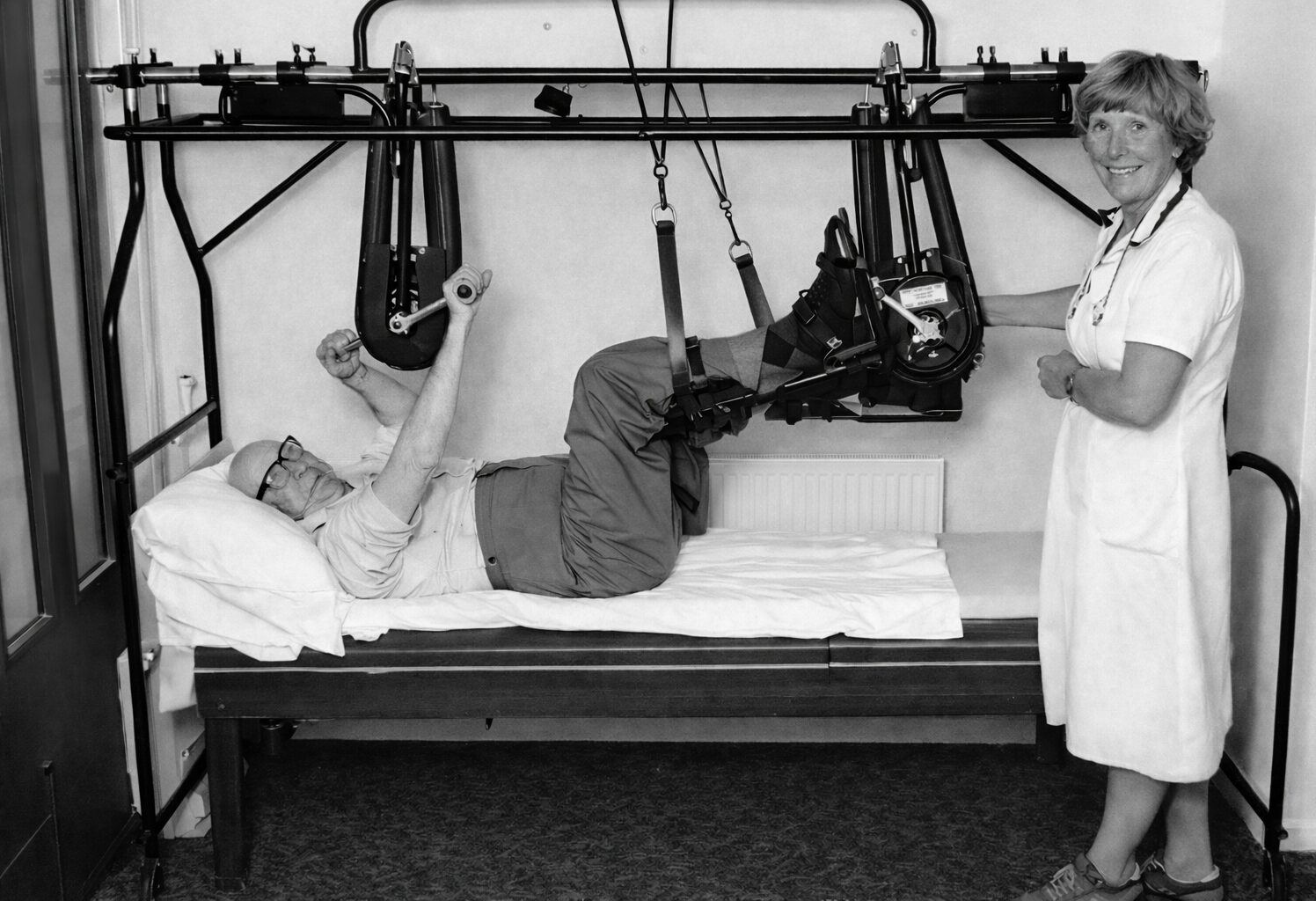
bedy cycle at chaseley
Guttman's bed bicycle at Chaseley
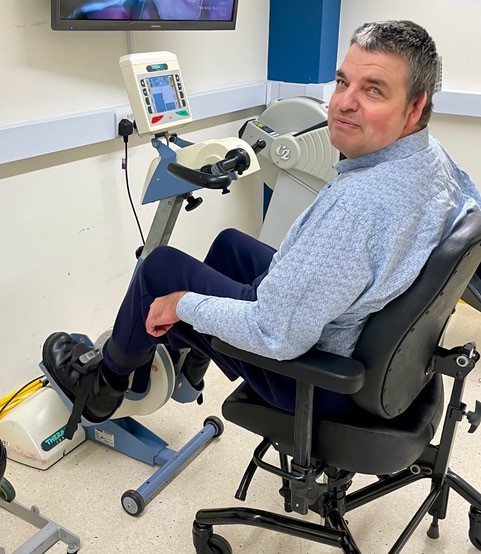
Chaseley Gym
Todays excercise cycles in Chaseley's gym