Chaseley and the Birth of the Paralympic Movement
The story of Chaseley runs quietly through the early history of the Paralympic movement. Long before the Games became a global sporting event, Chaseley residents were already taking part in the competitions that would eventually grow into today’s Paralympics.
Records from the early Stoke Mandeville Games show Chaseley residents competing alongside other disabled athletes in events such as archery. In 1950, Chaseley athletes again took part, competing in archery and even a wheelchair-based netball event. One athlete, Emanuel Kanakakis, is named in the records as representing Chaseley, clear evidence that the home was present at the very start of these pioneering competitions. This was not a small footnote in sporting history. Chaseley residents were actively involved in something that would change disabled sport across the world.
By 1952, Chaseley athletes were achieving notable success. The Chaseley archery team triumphed that year, with Bill Pye and Les Johnson among the winners. Johnson also claimed the javelin title, demonstrating the strength and competitive spirit of athletes training and living at Chaseley.
The Stoke Mandeville Games were led by Dr Ludwig Guttmann, Chaseley’s first medical consultant, and a pioneering neurologist who believed sport could play a vital role in rehabilitation for people with spinal cord injuries. Many of the early competitors were war veterans living in places like Chaseley, rebuilding their lives after injury. The first Games in 1948 were modest: a wheelchair archery competition held on the lawns of Stoke Mandeville Hospital. Yet the idea quickly grew. By 1960, the event had become the International Stoke Mandeville Games in Rome, now recognised as the first official Paralympic Games.
Chaseley’s connection to this movement can also be seen in the lives of athletes linked to the wider rehabilitation community around Stoke Mandeville. One remarkable example is Tommy Taylor. After breaking his neck in a car accident in Cyprus in 1956, Taylor was treated by Dr Guttmann and later used Chaseley as a day facility. Despite severe paralysis, he went on to become one of Britain’s most successful Paralympians. Over his career, he won 16 Paralympic medals across five sports, including 10 gold medals. His greatest success came in table tennis, where he was world champion from 1958 to 1968 and later won three gold medals at the 1980 Paralympics in Arnhem. Taylor received an MBE for services to disabled sport. His adapted table tennis paddle, wrapped with gauze padding and secured with a rubber strap so it could be fixed to his hand, still stands as a powerful symbol of determination and ingenuity.
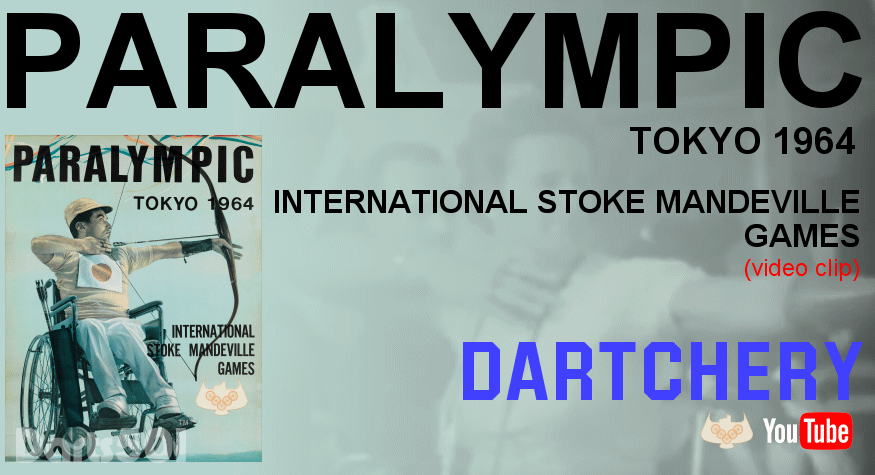
Innovation in sport also grew out of Chaseley. In 1952, the Chaseley Home team, comprised of wheelchair archers, won five out of seven national dartchery matches against non-disabled players. Dartchery, a sport invented at Chaseley that combines elements of darts and archery, later appeared in the Paralympic programme between 1960 and 1980. These ideas emerged from the same practical need: creating ways for people with serious injuries to stay active, competitive and connected.
Chaseley may not always appear prominently in official Paralympic histories. Yet the evidence is clear. Its residents took part in the early Games, its environment supported athletes rebuilding their lives through sport, and innovations developed within its walls reached the international stage.
Those early competitors were doing far more than taking part in a rehabilitation activity. They were laying the groundwork for a global movement that today celebrates the strength, talent and determination of disabled athletes across the world.
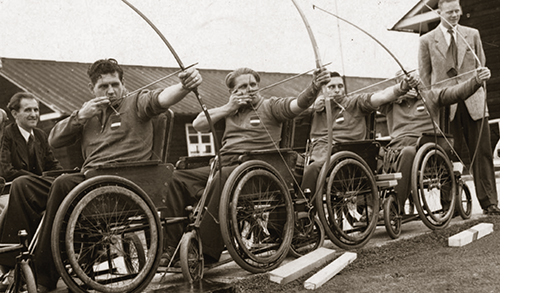
Stoke Mandeville Archery
Stoke Mandeville Archery
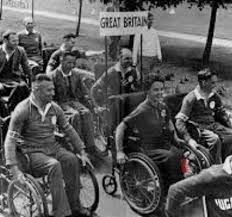
GB tream 1956
GB tream 1956
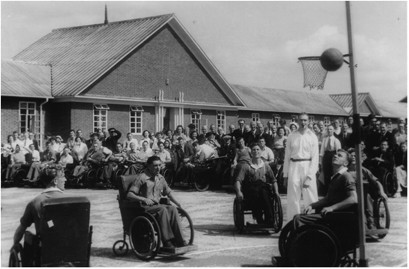
Stoke Mandeville Netball
Stoke Mandeville Netball
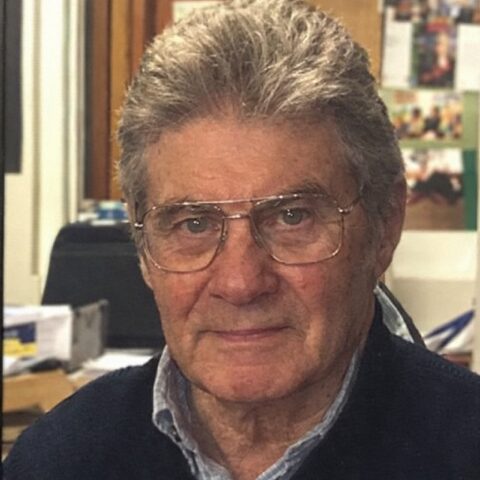
Tommy Taylor MBE
Tommy Taylor MBE